Thanksgiving Card Messages for Family, Coworkers and Clients
Fifteen cards in, every message starts to sound the same. A simple workflow, example messages for family, coworkers and clients, and an AI prompt template keep each one personal, including for people who do not celebrate.
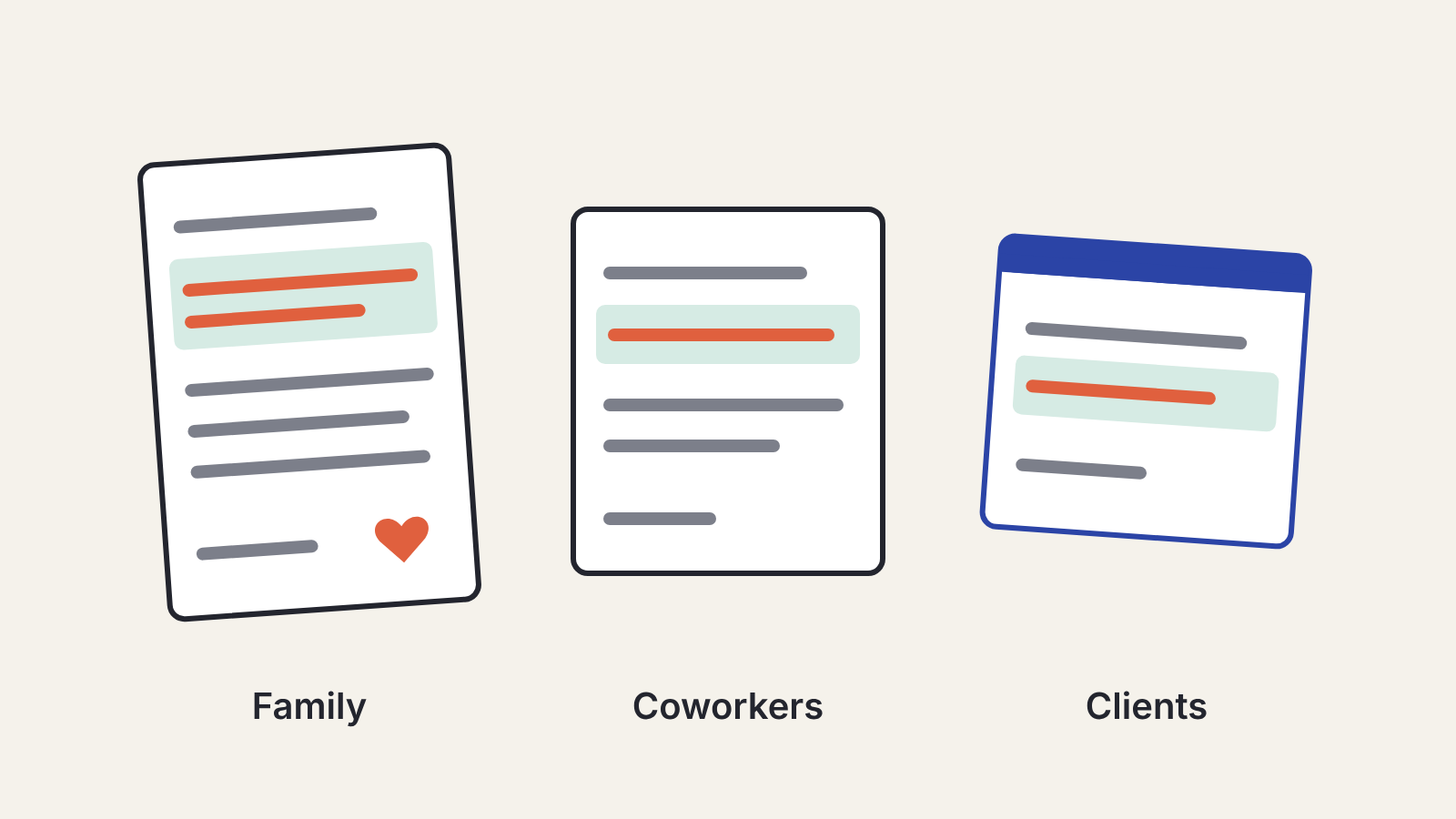
The best Thanksgiving card messages are two to four sentences long, written for one reader, and built around one specific thing you appreciate about them. For family, that can be warm and personal. For coworkers and clients, keep it brief, thank them for something concrete from the year, and word it so it still reads well to someone who does not celebrate Thanksgiving.
Below is a simple workflow for writing a stack of cards without them all sounding the same, example messages sorted by audience, and a prompt template for an AI assistant with the steps for making its output sound like you.
The workflow for a stack of cards
Writing one card is easy. Writing fifteen is where messages turn generic, because by card six you are copying card five. A little setup prevents that.
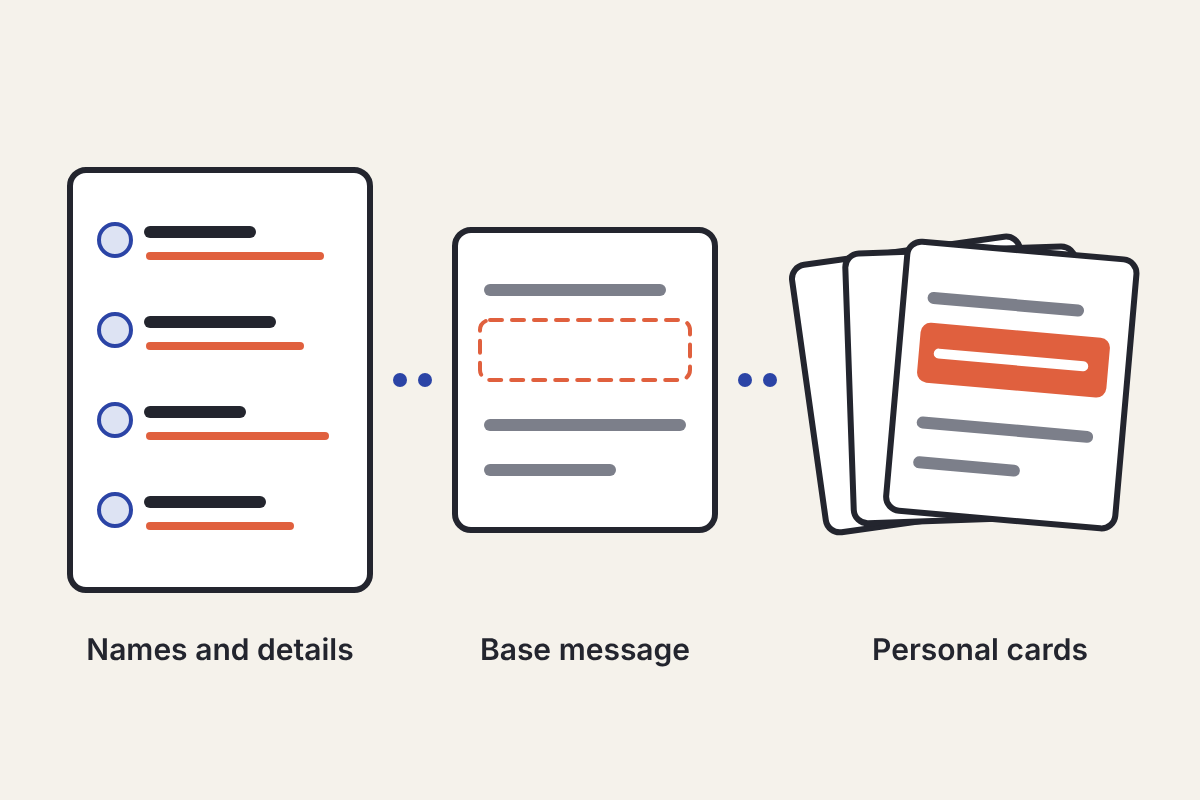
- List your recipients in three groups: family and close friends, coworkers, clients. Each group gets a different tone.
- Write one specific next to each name. A project you finished together, a favour, a visit, a running joke. One line is enough. If you cannot think of anything for a name, that card gets a short, sincere general message, and that is fine.
- Draft a base message for each group. This is the shape you will adapt, not the message you copy.
- Personalise each card with its specific. This is the step that makes cards feel written rather than printed.
- Read each one aloud before you copy it out or press send.
If you are also giving a toast this year, the same habit of collecting specifics first works there too. Our guide to writing a Thanksgiving toast or thank-you note goes through it step by step.
Messages for family and close friends
Family cards can be personal, a bit funny and longer than the others. The specific matters most here, because family will notice a message that could have gone to anyone.
Thank you for the Sunday phone calls this year, even the ones that were mostly about your tomatoes. They kept me going through a long spring. Happy Thanksgiving, Mum.
Happy Thanksgiving to my favourite co-host. Next year I'm in charge of the turkey and you're in charge of keeping me calm. Love you.
I'm grateful for a lot this year, and you two are near the top of the list. Thank you for having the kids in July. They're still talking about the lake.
Sorry we can't be there this year. Save me a slice of pie and a seat for Christmas. Thinking of you all on Thursday.
Notice that each one names a thing: the phone calls, the turkey, the lake. Swap in yours.
Messages for coworkers
Workplace cards should be short, warm and professional. Thank people for something they did, keep personal life out unless you know them well, and remember that not everyone on a team celebrates Thanksgiving. Colleagues may be in other countries, observe other holidays or simply not mark it.
An easy way to keep messages inclusive is to make the thanks the main point and the holiday a light touch, or leave the holiday out altogether:
Thank you for everything you brought to the launch this autumn, especially the late-night check of the release notes. I hope you get a proper break this week.
Working with you this year has been a highlight. Thank you for always making time for questions. Wishing you a restful end to November.
Happy Thanksgiving to those celebrating, and a quieter inbox to everyone else. Thank you for a great year on the team.
A quick thank-you before the holiday rush: your notes on the Q3 report made it much better. Enjoy the long weekend if you're taking it.
For a team card that everyone signs, keep the printed or typed message general and let each person add a line of their own.
Messages for clients
Client cards are a thank-you for the working relationship. Keep them brief, professional and free of any sales message. A card that ends with a pitch reads as marketing, and the warmth goes out of it.
Thank you for trusting us with your project this year. It has been a pleasure working with you and your team, and we look forward to what comes next.
As the year winds down, we wanted to say thank you. Working with you on the spring campaign was a real highlight for us.
With thanks for your partnership this year. Wishing you and your team a restful season.
Thank you for a great year of working together. We especially enjoyed [specific project or moment], and we're grateful for your trust.
The same inclusivity point applies. If you do not know whether a client celebrates Thanksgiving, a message about gratitude and the end of the year works for everyone and still arrives at the right time.
Before sending anything to a client, check that every detail is right: the project name, the person's name and spelling, the company name. A warm card with a misspelt name does more harm than no card.
A prompt template for an AI assistant
An AI assistant is useful for producing first drafts quickly, especially when you have a long list. The quality of what you get depends almost entirely on what you give it. A bare request like "write Thanksgiving card messages for clients" gives you the most average messages possible.
This template gives the assistant enough to work with:
I'm writing Thanksgiving cards. Recipient: [name and relationship, e.g. "a client I've worked with for two years"]. Specific thing I'm thankful for: [one concrete detail]. Tone: [e.g. warm and professional / light and funny]. Length: [2–3 sentences]. They [do / may not] celebrate Thanksgiving, so [mention the holiday / focus on thanks and the end of the year]. Write three different versions. Use only the details I've given, don't invent any new ones, and avoid clichés about blessings and gratitude.
Fill it in once per recipient, or once per group with a list of names and details if you are doing many at once. Asking for three versions gives you lines to choose from instead of one draft you are tempted to accept as is.
How to personalise what the assistant writes
Treat the output as a starting point. These steps take a minute per card and make the difference between a message that sounds produced and one that sounds like you:
- Check every fact. Assistants sometimes add details to make a message feel fuller, a "productive meeting" or a "successful quarter" that you never mentioned. Delete anything you did not supply.
- Replace the polished phrases. If you would never say "heartfelt appreciation" out loud, change it to what you would say.
- Shorten. Most drafts improve when you cut the first sentence and the last one. The middle is usually where the real message is.
- Add one thing only you know. An in-joke, a nickname, the name of the café where you meet.
- Vary across the stack. If you used the same draft shape for ten cards, change the opening line on each so they do not read as a mail merge if two recipients compare.
Our guide on editing an AI-assisted draft so it still sounds like you explains the editing passes in more detail, and a short personal style sheet pasted into your prompt saves you from fixing the same phrases on every card.
A before and after
Here is a client message straight from an assistant, and the edited version:
Draft: This Thanksgiving, we want to express our heartfelt gratitude for your continued partnership and trust. Your collaboration has been instrumental in our shared success, and we look forward to many more productive years together.
Edited: Thank you for a great year, Lena. The rebrand was our favourite project of 2026, and your team made it easy. Wishing you a restful end to the year.
The edited version names the person and the project, drops the claims that sound like a press release, and is shorter. It also no longer depends on the client celebrating Thanksgiving.
Before you send or seal
Read each message aloud once, or let your device read it back to you. It is the fastest way to catch a missing word, a sentence that runs too long, or a phrase that sounds stiff. Then check names and spellings one last time, and write the card itself by hand if you can. A typed draft followed by a handwritten card gives you the ease of editing and the personal touch your reader will see.
